Auto Parts Inventory Management Software

Know What Is on the Shelf Before the Job Starts

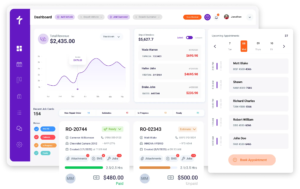
Auto parts inventory management software tracks every hard part and shop consumable you carry, updates the count as parts move, and shows what is left before a job stalls waiting on something the system said you had. Torque360 auto repair inventory management software gives shops a searchable parts catalog, live stock levels, purchase order management, and counts that update the moment a job consumes stock. Trusted by 1,000+ repair shops across the auto, truck, motorcycle, RV, and powersports industries.
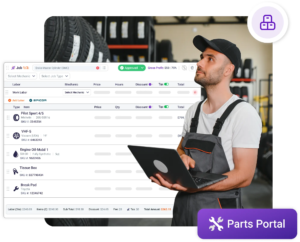
  • Track hard parts, tires, wheels, and oil in one catalog

  • See live stock levels, part costs, and vendor details

  • See availability and cost before you quote a job

  • Stock adjusts when a part is added to a repair order

  • Raise purchase orders and track them until parts land

Auto Parts Inventory Management Software

How Does Parts Inventory Tracking
Work in a Shop?

Torque360 parts inventory tracking software keeps stock tied to the jobs that consume it. Every catalog item carries a quantity, a cost, and a vendor, and every part added to a job updates the count on its own.

Build the Catalog

Add the parts and shop supplies you keep on hand, each with a part number, cost, quantity, and vendor. Existing lists come across during onboarding rather than being typed in.

Pull Parts for a Job

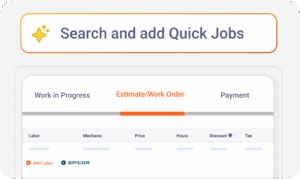
Service advisors and technicians add stocked parts to the estimate or repair order as the work is quoted. Pricing and part details carry across without a second entry.

Watch the Count Move

The count drops by whatever the job consumed, the moment the part joins the repair order. Nobody stops to update a spreadsheet after the last car has left.

Restock the Shelf

Review quantities against what you know moves, then order what has run down before the shelf is bare. One PO can cover both restocking and a one-off item.

Read the Usage Data

Look back at what moved and what sat before the next buying round. Usage over a month tells you whether you are stocking the right depth.

Power Your Shop with Connected Integrations

What Does Weak Parts Inventory Control Cost a Shop?

Weak inventory control drains a shop in four places at once, and most shops are running at least two of them without measuring either. We call these the four inventory leaks: phantom stock, panic buying, dead stock, and unbilled parts.
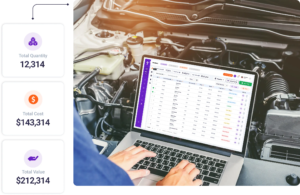
The system says five and the shelf says zero, because parts leave without being recorded. The count drifts a little further from reality every week until a job stops.

Learning you are low only when you are already out forces a rush order at a premium price. The part costs more, and the bay it was holding sits idle.

Parts nobody has touched in a year are cash the shop already spent and cannot use. Dead stock builds through duplicate ordering, which is a visibility problem before a purchasing one.

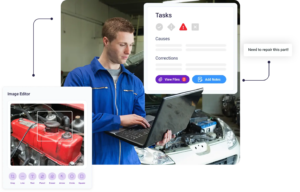
A part goes on the vehicle, never reaches the repair order, and never lands on the invoice. The shop absorbs the cost, and the customer gets a discount nobody approved.

auto inventory management system
Mechanic Shop Software

How Do You Get Every Part Into a Single Catalog?

The Torque360 Parts Catalog holds every part and shop supply in one centralized parts view, searchable by name or number. Shops running this auto inventory management system stop keeping one list in a spreadsheet, another in a drawer, and a third in somebody’s memory.

Hard parts, tires and wheels, oil and fluids, and shop supplies all sit in the same catalog. Toggle between parts and supplies so consumables get counted like everything else.

Type a part name, a part number, or a fragment of either and the item surfaces. A technician who finds it on screen in seconds is not walking the shelves.

Every catalog item shows what is left, what you paid, and who supplied it. Cost sitting next to quantity is what stops a part from going out at last year’s price.

Bring the parts list you already keep rather than rebuilding it by hand. The onboarding team handles supported data migration, including your inventory data, before the go-live date.

How Does Stock Update as Parts Move Through Jobs?

Real-time parts stock tracking means the number changes when the part changes hands, not at the end of the week. In Torque360, that adjustment happens as jobs consume parts, so the figure on screen matches what is actually left.
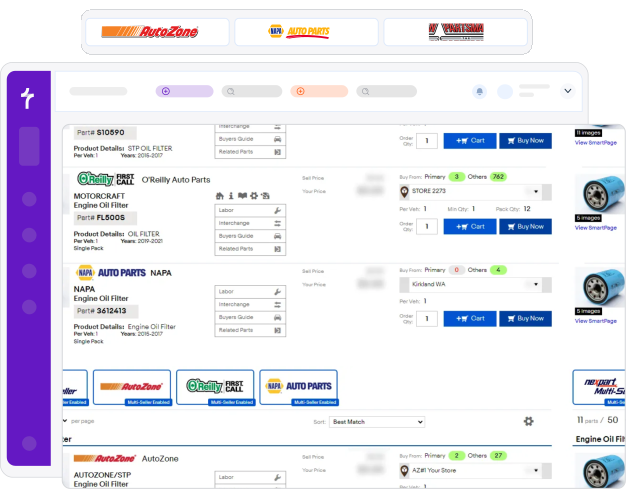
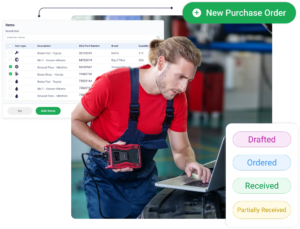
Put a part on a repair order and on-hand quantity falls by what the job used. Nobody updates a second system, and the count holds steady through a busy week.

Every part stays linked to the repair order it was fitted on. Owners can track parts usage job by job, which is what turns a stocking decision into something defensible.

Physical counts still need checking against the shelf twice a year at minimum. Correct the quantity in Torque360, and the new figure carries forward instead of living on a clipboard.

Parts pulled onto a job stay on it through invoicing. What came off the shelf is what the customer is billed for, which closes the gap between stock used and money collected.

Auto Parts Inventory Management Software

How Do You Restock Parts Before the Shelf Empties?

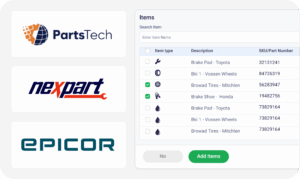
Restocking starts with knowing what is actually on hand, which is why stock levels sit beside the job and the purchase order. Torque360 covers purchase orders, bills, and returns, while supplier sourcing carries on inside integrated parts ordering through Nexpart, PartsTech, and Epicor.
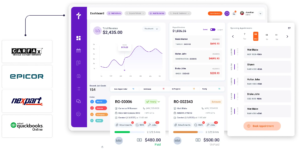
Live quantities are visible while an estimate is being built. Advisors promise a completion time knowing whether the part is on the shelf or still has to be ordered in.

Generate a purchase order for the items running down, and add new or special-order parts a job calls for. Nothing gets retyped between the catalog and the PO.

Track each purchase order as items move from ordered to received or delayed. Record the purchase bill so what the vendor charged is captured alongside the order you raised.

Parts going back to the vendor are handled through return order processing. That keeps the return on record instead of the shop remembering a box went out the door.

Stop Finding Out You Are Out at the Worst Time

See how Torque360 auto parts inventory management software keeps a live count of everything you stock, moves it as jobs consume parts, and keeps purchasing on the same screen as the repair order.

Built to Power Entire Auto Shop Operation

How Do You Keep Physical and System Counts Aligned?

Barcode scanning inventory keeps the shelf and the software telling the same story. Every quantity typed in by hand is one more chance for the two to disagree, which is how a shop ends up with numbers nobody acts on.
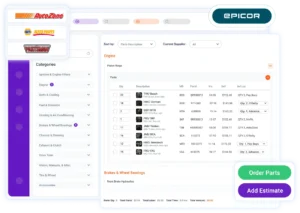
Barcode inventory for auto repair replaces the clipboard pass through the parts room. Scanning during receiving and counting cuts the keying mistakes that push system counts out of step.

Checking a delivery in against its purchase order raises the count when the parts arrive. Receiving is the step most shops skip, and it is the one that keeps counts trustworthy.

Physical counts still need checking against the shelf twice a year at minimum. Correct the quantity in Torque360, and the new figure carries forward instead of living on a clipboard.

Scanning makes it practical to check one shelf at a time instead of closing for an annual count. High-value bins can be counted monthly while slow shelves wait for a full pass.

Auto Parts Inventory Management Software
Mechanic Shop Software

How Do Inventory Reports Show What to Keep Stocked?

Inventory value and turnover reports answer two questions every owner should know without hunting: what the shelves are worth today, and how much of that stock moves. Vehicle parts inventory management is half finished when you know what you hold but not what holding it costs.

Stock value shows how much working capital is sitting in parts right now. Owners who can answer that price jobs, plan purchasing, and value the business on real numbers.

Turnover separates the parts that earn their shelf space from the ones collecting dust. Caught early, a slow mover can be returned or fitted, and caught late, it is a write-off.

Inventory reporting on this page covers stock value, parts usage, and turnover only. Parts margin and the wider shop performance picture both live in profitability reporting and advanced business reporting.

Which Shops Need Parts Inventory
Software Most?

Not every shop needs stock control, and pretending otherwise wastes a buying decision on software that sits unused. Car repair shop inventory software earns its place once parts move through the building faster than a person can keep straight.

Shops That Stock Fast Movers

If filters, pads, fluids, and hardware leave the shelf weekly, the count is already drifting. Shop inventory software for mechanics is the fix once memory stops keeping up.

Shops Losing Parts Off Invoices

When small components reach the vehicle but miss the bill, margin leaks quietly every week. Linking parts to repair orders closes that gap without adding a paperwork step.

Shops Running Multiple Bays

More bays mean more hands reaching into the same shelf on the same busy morning. A single shared count keeps advisors quoting against reality rather than against yesterday’s guess.

Shops That Stock Almost Nothing

A pure just-in-time shop ordering every part per job gains less from stock control. Those shops usually get more value from parts ordering, then add inventory as stocking grows.

How Does Inventory Connect to the Shop Workflow?

Parts inventory is not a standalone module bolted onto the side of Torque360. Stock links to estimates, repair orders, invoicing, quick checkout, and reporting so a single part is counted, quoted, fitted, and billed against the same record.

appointment-booking-widget

Book jobs, manage calendars, and reduce no-shows.

digital vehicle inspection software

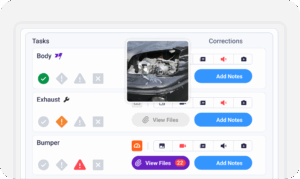
Capture photos and videos. Add notes and findings.

auto repair estimating software

Build accurate estimates with labor, parts, and pricing.

repair order software

Convert approved work into organized repair orders.

auto repair invoicing software

Generate invoices from completed labor and parts.

auto repair job board software

Track jobs, assign technicians, and monitor progress.

Which Repair Shops Does Torque360 Inventory Fit?

What sits on the shelf changes with the kind of vehicles coming through the door each week. The same auto parts inventory management software handles all of them from one catalog, and tire businesses can see the full counter workflow on the tire shop management software page.

Mechanic Shop

Motorcycle Repair

Truck Repair

Oil Change

Tire Repair

Mobile Mechanics

Case Studies

Tighter Counts. Fewer Stalled Jobs.
Better Margin.

Repair shops use Torque360 to keep parts counts honest, cut the time technicians lose hunting for stock, and stop small components from slipping off the invoice. Owners get a shelf they can trust and purchasing decisions backed by what jobs actually consumed.

Artur Pires, Owner at Mapgreen Motorsports
Mapgreen Motorsports

"Torque360 changed everything for us. On long projects, nothing gets lost anymore. Labor, parts, approvals, it’s all there. Since using it, I haven’t lost a single cent."

View Story
75%
Missed Revenue Prevented
2x
Increase in Project Visibility
Cauy Cuthbertson, Owner at Charles Garnett
Charles Garnett

“Torque360 has everything I was looking for. From scheduling and tracking jobs to QuickBooks Online integration and Torque Pay, it helps me stay organized.”

View Story

8+ Hrs
Saved on Daily Operations
100%
Same-Day Invoicing with TorquePay
Himel, Owner at Halal Auto Care
Halal Auto Care

"We were doing estimates and tracking jobs manually, and it caused delays and confusion. Now with digital estimates and invoicing, everything is faster and more organized."

View Story

50%
Faster Estimate & Job Processing
1.2x
Higher Customer Capacity
Shop owner video testimonial
Tire & Wheel Xperts

“Torque360 makes everything easy, efficient, and professional. Each invoice only takes about one to two minutes now. I recommend it 100%.”

View Story

1-2 min
Invoice Creation Time
95%
Automated Inventory Sync
Shop owner video testimonial
Cauy Cuthbertson

"Torque360 helped us bring everything into one place. Jobs, parts, and invoices are easier to manage, and the shop runs more smoothly day to day. It gives us the structure we needed."

View Story
100%
Centralized Shop Workflows
2x
Boost in Operational Efficiency
Testimonials
Here’s What Our Customers Have To Say!
google
capterra
trustpilot
G2 Award Badge for User Love in Auto Repair Shop Software

Every Part Accounted For, From Shelf to Invoice

Torque360 auto parts inventory management software holds your whole catalog in one place, moves stock as jobs consume it, and keeps purchasing connected to the repair orders that drive it.

  • One searchable parts catalog for every item you stock

  • Live stock levels tied to every repair order

  • Purchase orders raised and tracked in one system

  • Parts used carried through to the customer invoice

Frequently Asked Questions

Auto parts inventory management software tracks a repair shop’s parts and supplies in real time, covering stock levels, usage, purchasing, and stock value from one place. In Torque360, stock connects to estimates, repair orders, and invoices. The count reflects what jobs consumed rather than what somebody remembered to write down.

Stock the parts you fit most often and order the rest per job. A common rule is that roughly twenty percent of your part numbers cover eighty percent of volume, and those are worth holding. Base each stocking depth on how fast the part moves and how long your supplier takes.

A spreadsheet works until two people start pulling parts from the same shelf. The trouble is not the spreadsheet itself but the update step: every count depends on somebody remembering to type it in after a busy day. Software removes that step by adjusting stock from the repair order.

Almost always because parts left the shelf without being recorded on a job. That gap is phantom stock, and it grows every week until a technician opens an empty box mid-repair. Tying every part to a repair order and scanning during counts closes it at both ends.

Stock adjusts at the point the part goes onto the repair order. The quantity on hand drops by the amount used, and the part stays linked to that RO for billing. There is no second system to reconcile, which is what keeps small components from vanishing off the invoice.

Work out which parts can stop a job, then review those quantities on a fixed schedule rather than when someone notices a gap. Weekly usage and supplier lead time tell you the depth to hold. Shops that check stock only when the shelf looks empty pay rush freight on parts they could have ordered days earlier.

Many shops aim for six to twelve turns a year, meaning stock replaces itself every one to two months. Below that range usually points to slow movers taking up shelf space and cash. Well above it can mean you are running lean enough that jobs occasionally wait on a delivery.

No, and that distinction matters. Torque360 handles the stock side and lets you raise a purchase order, but a person still decides what to buy and from whom. Placing the order happens through integrated parts ordering with Nexpart, PartsTech, and Epicor.

Yes. The onboarding team migrates supported records before your go-live date, including customer information, vehicle history, and the parts inventory data you already keep. Shops then get a validation window after launch to confirm quantities, costs, and vendor details all came across correctly.

Inventory management is included in every Torque360 plan, starting at $99.99 per month or $89.99 per month billed annually. Parts ordering integrations vary by tier. PartsTech and Nexpart are included with the Starter plan, while Epicor parts and labor guide data are available on Turbo and above.